

Cover
Roasted pumpkin soup
Roasted, not boiled. That one change makes it a completely different soup.
Roasted, not boiled. That one change makes it a completely different soup.

Photo: U.S. Department of Agriculture · Public domain
165cal
Approximate values, calculated from food composition tables. They vary with the brands and cuts you use.
5 steps · turn the pages with the arrows or by swiping
Cover
Roasted, not boiled. That one change makes it a completely different soup.
1Step 1 of 5
Heat the oven to 400 °F (200 °C). Cut the squash into 1¼-inch (3 cm) cubes, the onion into quarters and the carrot into chunks. Spread everything on a sheet pan with the unpeeled garlic, drizzle with the oil, add salt, pepper and cumin, and toss with your hands.
Tip: In a single layer, not piled up. Crowded vegetables steam instead of roast, which is exactly what we want to avoid.
2Step 2 of 5
Roast for 35 minutes, stirring once halfway. They're ready when the edges of the squash are golden and a fork goes in with no resistance.
Tip: Those toasty edges are literally the flavor of the recipe. If you take the pan out with nothing browned, it needs more time.
3Step 3 of 5
Transfer the vegetables to the blender, squeezing the garlic out of its skin. Add half the hot broth and blend on high for 1 minute.
4Step 4 of 5
Gradually add the rest of the broth until you reach the thickness you like. For dinner I like it thick, so the spoon almost stands up; if you prefer it lighter, add a bit more broth.
Tip: Better to add too little broth and top it up. Thinning is easy; thickening isn't.
5Step 5 of 5
Taste for salt and pepper. Serve with toasted pumpkin seeds on top and a drizzle of raw olive oil.
Almost everyone makes pumpkin soup by boiling the squash, and that's the problem: it soaks up water, loses flavor and you end up with a pale soup that has to be rescued with cream and bouillon cubes.
Roasting does the exact opposite. The water evaporates, the natural sugars caramelize and the flavor concentrates. The soup comes out sweet, intense and a gorgeous orange without adding anything.
165 calories per serving and silky without a drop of cream. It's the fall and winter dinner.
A thumb-sized piece of fresh ginger roasted with the vegetables. It adds a very pleasant warmth.
Top it with a chopped hard-boiled egg or some crunchy chickpeas and it becomes a real one-bowl dinner.
Storage
4 days in the fridge and up to 3 months in the freezer. It freezes very well because it has no dairy.Questions
Because boiled squash soaks up water and the flavor gets diluted, while roasted squash loses water and its sugars caramelize. The difference in flavor is huge, and it's why this soup doesn't need cream or bouillon.
You can sauté the squash in a wide skillet over high heat until it browns, then add the broth. It's not quite the same, but it's much closer than boiling it.
Butternut is the most reliable: sweet, not too watery and easy to peel. Sugar pumpkin works well too. Hard-skinned squash like kabocha tastes great but is much harder to peel.
Keep cooking
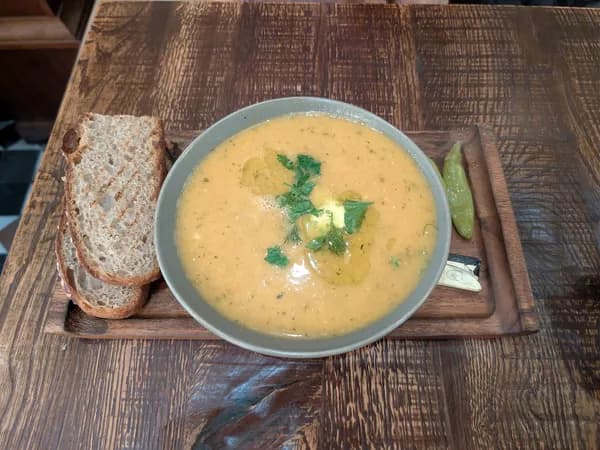
The classic Spanish spoon dish, with a slow sofrito and no chorizo covering up the flavor.
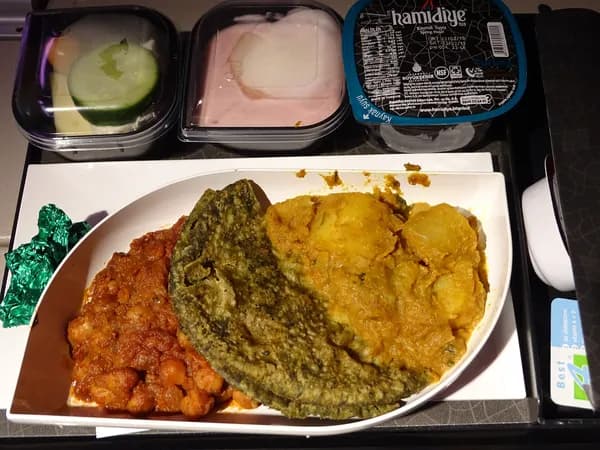
Fifteen minutes and a complete dinner. Golden chickpeas are nothing like the ones from the can.

Fifteen minutes, plus a timing chart by vegetable so every one comes out just right.